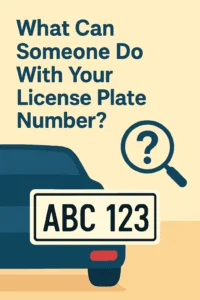
Questions about license plate privacy are more common than most people realize. A plate is displayed in public every day—on streets, in parking lots, and at traffic lights—yet many drivers are unsure what information it actually reveals. With so much personal data accessible online, it’s easy to assume a license plate might unlock far more than it should.
In reality, license plates are designed to balance identification and privacy. They do not provide open access to personal details like home addresses or names for the general public. However, that doesn’t mean they’re completely risk-free. Certain misuse scenarios exist, and misunderstanding how plates are accessed can either cause unnecessary fear or lead people to overlook real risks.
Understanding what a license plate can and cannot be used for is essential for modern car owners. This includes knowing who has legal access to plate information, what common myths get wrong, and how misuse actually happens in real life.
This guide breaks down exactly what someone can do with your license plate number, what is legally protected, and how to reduce exposure to genuine risks—clearly, factually, and without alarmism.
Understanding What a License Plate Really Represents
When you look at that small metal rectangle strapped to your bumper, it doesn’t seem like much. But behind those characters sits a system that connects your car to records most people will never see: registration details, inspection data, ownership history, and insurance status (depending on the state).
But here’s the part that often surprises people—almost none of that information is accessible to the general public.
Your plate is basically an identifier that law enforcement, government agencies, and certain licensed entities can use, but not random people on the street. If someone snaps a photo of your license plate, they don’t suddenly gain access to your address, your phone number, or your life story.
Still, that doesn’t mean the number is meaningless. People can misuse it in smaller but annoying or harmful ways if you’re not aware.
What Someone Cannot Do With Your License Plate Number
Before getting into the gray areas, want to clear up the biggest myth. Most people imagine someone can plug their plate number into a website and instantly retrieve their home address. Thankfully, the world doesn’t work like that.
1. They can’t get your personal details through official government channels
Departments of Motor Vehicles, police databases, insurance networks, and state registration systems are locked behind strict laws. The big one is the Drivers Privacy Protection Act (DPPA) in the U.S. This law blocks public access to identifying information connected to your plate. That means:
- No home address
- No phone number
- No name
- No email
- No full vehicle history
- No registration documents
Unless someone is law enforcement or a licensed investigator operating under DPPA rules, the details are off-limits.
2. They can’t legally track your location
A plate alone doesn’t provide tracking access. For someone to monitor where your car goes, they’d need equipment like automatic license plate readers (ALPR), which private citizens do not legally control.
3. They can’t use your plate to access your financial records
Financial institutions, lenders, and insurance companies aren’t allowed to provide any personal data tied to a plate without proper consent.
4. They can’t transfer ownership of your vehicle
Your plate number by itself is useless for any kind of fraudulent transfer or title theft. That requires documents and numbers that aren’t public.
What Someone Can Do With Your License Plate Number
Now we get into the more grounded but realistic side of things. Even though a plate number doesn’t unlock your identity, it can still be used in ways that range from harmless to irritating and, in rare cases, troublesome.
1. Report you to authorities or local agencies
If someone believes your car broke a rule—speeding, blocking a driveway, parking illegally—they can report your plate. This doesn’t give them information about you, but it does give authorities something to reference.
You won’t get a ticket every time, but your plate becomes a reference point that can prompt:
- A warning
- A mailed notice
- Additional patrols in an area
This is one of the most common “uses” of a license plate by strangers.
2. File a complaint with your insurance (if there’s a collision or damage)
If someone claims your car caused damage or was involved in a minor hit-and-run, they can report your plate. Your insurer might then contact you to get your version of the story.
Most people don’t realize this, but if a plate is all someone got during a minor incident, an insurer will typically still open a case. They won’t assume wrongdoing, but they’ll want the details.
3. Take your plate and use it to falsely accuse you of something
This is rare, but it does happen. I’ve spoken to readers who received calls about incidents they weren’t part of simply because someone misread or incorrectly reported their plate. A single number off can point to the wrong car entirely.
This is why it’s important to:
- Keep your registration current
- Know your exact plate characters
- Respond to any official inquiry promptly
Most misunderstandings clear up quickly with the right documentation.
4. Clone your plate for illegal use
This is the biggest concern—and while uncommon, it’s the scenario that can cause real headaches.
Plate cloning happens when someone copies your license plate and sticks it onto their own vehicle. They do this because:
- Their own car isn’t registered
- Their car can’t pass inspection
- They want to avoid toll fees
- They want to avoid tickets
- They want to avoid being tied to crimes
When enforcement cameras pick up the cloned plate, the system points to you, not the offender.
Signs that your plate has been cloned:
- Toll charges from places you’ve never driven
- Tickets mailed to you for areas you weren’t in
- A sudden spike in violations
- Notices dated during times your car was parked
The moment this happens, act immediately.
5. Use your plate to look up your vehicle online
While personal info stays private, people can still gather basic, non-sensitive details from open automotive databases or simple web searches.
Some websites let users see:
- The car’s make
- The year
- The trim
- The color (in some cases)
- State of registration
This doesn’t reveal anything harmful but might give a rough picture of the vehicle.
6. Try to find you on social media
This is less about the plate itself and more about human behavior. If your car is distinctive and your plate is visible in photos you’ve posted online, someone might match your car to your social media profile.
This isn’t hacking—this is people scrolling. But it’s still something to be aware of.
How Someone Might Misuse Your Plate (and What to Do About It)
Now let’s walk through the more problematic things someone might attempt, and how to protect yourself in each scenario.
1. False Reports
If someone falsely reports your car, you might receive:
- A notice in the mail
- A call from a local agency
- A request for clarification
Don’t panic. Simply provide:
- Proof of where you were
- Registration details
- Any timestamps (receipts, work logs, etc.)
Most of these situations resolve within minutes once you explain the circumstances.
2. Tolls Charged to You Incorrectly
This can happen from misreads or plate cloning.
Steps to fix it:
- Contact the toll agency immediately.
- Provide evidence—photos of your car, plate, and any distinguishing features.
- Ask them to review the camera footage.
- File a cloning report with your local DMV if charges persist.
Never ignore these notices. Agencies assume silence is acceptance.
3. Tickets You Didn’t Receive in Person
Surprisingly common. Cameras misread plates often.
Fix it the same way:
- File a dispute quickly
- Submit photos of your actual car
- Show differences (color, make, model)
State systems are used to handle these disputes.
4. Plate Cloning
If you ever discover your plate is being copied, handle it immediately.
Here’s what to do:
- File a police report
- Visit your DMV and request new plates
- Keep copies of the report for future disputes
This protects you from repeated violations linked to the cloned plate.
5. Social Media Tracking
Someone noticing your car online isn’t dangerous on its own, but if privacy matters to you, do this:
- Blur your plate when posting photos
- Avoid tagging locations in real time
- Remove public-facing personal info
It’s more about minimizing digital footprints than reacting to a threat.
Real-World Examples Of How Plates Have Been Misused
Over the years, We’ve heard countless stories. Here are a few that made us rethink how seriously to treat our own plate.
Example 1: The Toll Bill Mystery
A reader once emailed me after receiving three toll charges from a state he hadn’t visited in years. At first, he thought it was a glitch. Then he checked the timestamps and realized they didn’t match his routine. After calling the agency, he learned the car caught on camera was a completely different model. His plate had been cloned.
Example 2: The Parking Complaint
Someone snapped a photo of a car blocking a driveway, and the homeowner reported the plate. Turns out, the driver wasn’t even in the neighborhood that day. The confusion came from a single mistaken digit.
Example 3: The Wrongful Ticket
One driver received a red-light ticket, only to discover the camera footage showed a car that was the same color but a different brand altogether. A small smudge made the system misread the plate.
Each case shows the same pattern: mistakes happen, but they’re usually fixable when handled promptly.
How To Protect Yourself From Plate Misuse
Here’s what to do and recommend to every car owner:
1. Take clear photos of your vehicle regularly
Front, back, sides, and interior if possible.
Why? These photos help you prove:
- Your plate style
- Your car’s color
- The correct trim
- Modifications
- Stickers or unique features
This helps dispute any false claim instantly.
2. Save receipts or digital records of where you park
You don’t need to obsess over this, but occasional timestamps help create a pattern that proves your location when needed.
3. Check for unauthorized toll charges or tickets
A monthly check is usually enough.
4. Don’t post clear photos of your plate online
If you enjoy sharing your car, blur the plate. Most phones let you do it in seconds.
5. Report cloning immediately
The longer you wait, the harder it becomes to challenge multiple violations.
Is It Worth Hiding Your Plate in Public?
This is the big question people always ask me. Here’s my honest answer:
No—covering your plate during normal life doesn’t do much.
Your plate is meant to be visible on the road.
However:
- When posting photos online, covering it makes sense.
- At shows, events, or meetups, many people cover their plates for privacy.
- If your plate is extremely unique or personalized, hiding it online is even more reasonable.
Public exposure isn’t the problem. Misuse through digital channels is.
Should You Worry? Here’s My Personal Take
After years of studying this subject, here’s the truth most people never hear:
Your license plate may feel like a key to your identity, but it’s not.
For the average person who glimpses your plate in traffic, there’s almost nothing they can do with it.
Most risks come from:
- clerical mistakes
- system errors
- toll misreads
- the rare case of plate cloning
These are fixable and manageable. The fear of someone “finding your home address through your plate” simply isn’t grounded in reality.
You should stay aware but not anxious.
Final Thoughts
If you’ve ever worried that someone could do something harmful just by seeing your license plate, hope this guide gives you peace of mind. The real risks are often smaller and more manageable than the rumors suggest.
Your plate is a public identifier, not a personal one. Most threats come from misunderstanding rather than malicious intent. Still, knowing how to protect yourself puts you far ahead of the average car owner.