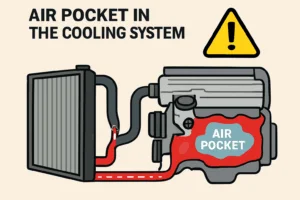
An air pocket trapped inside a vehicle’s cooling system can cause confusing and inconsistent behavior. Temperature gauges may rise and fall unexpectedly, cabin heat may turn cold even when the engine is warm, and the system may seem unable to regulate itself properly. These symptoms often appear suddenly and can be mistaken for sensor issues or minor glitches.
Air pockets usually form after coolant service, leaks, or improper bleeding, and they disrupt normal coolant flow. When coolant cannot circulate evenly, heat builds up in certain areas while other parts of the system remain cool. Over time, this imbalance can lead to overheating, poor heater performance, and even engine damage if left unaddressed.
Because the signs are not always dramatic at first, air pockets are easy to overlook. However, recognizing the early warning signals makes a major difference in preventing more serious problems.
This guide explains the common symptoms of air trapped in the cooling system, the signs that require immediate attention, and practical ways to correct the issue before it turns into a costly repair.
What an Air Pocket Actually Is and Why It Happens
Before we dive into the symptoms, let us explain what the issue really is. An air pocket is exactly what it sounds like — a trapped air bubble sitting somewhere inside the cooling system. Your car’s engine relies on constant coolant circulation. When air gets stuck in the wrong spot, it disrupts that controlled flow. Instead of coolant touching the hot surfaces inside the engine, there might be a pocket of air blocking the way.
That may not sound serious at first, but it absolutely is. Coolant carries heat away from the engine. Air doesn’t. So wherever that bubble sits, temperatures rise faster than expected.
Air can sneak into the cooling system from several places:
- A coolant change that wasn’t bled properly
- A tiny leak around a hose, clamp, or gasket
- A failing water pump seal
- A loose radiator cap
- Low coolant that pulls air into the passages
- Cracks in the radiator or reservoir
Some cars are especially sensitive to air pockets. Modern cooling systems have complicated routing, extra valves, electric pumps, and multiple temperature sensors. That means even a small bubble can cause exaggerated symptoms.
The First and Most Common Sign: Temperature Fluctuations
The first thing most people notice, including me, is the temperature gauge behaving strangely. Instead of the smooth rise to normal operating temperature, you get sudden jumps and drops.
Why this happens:
Coolant sensors measure the temperature of the fluid surrounding them. When an air pocket passes by, the sensor may be touching hot metal or air instead of coolant. Since air heats up much faster than coolant, the reading spikes.
What it feels like from the driver’s seat:
You’re driving casually and suddenly the needle climbs higher than usual. Your heart drops for a second, thinking the engine is overheating. Then, just as quickly, the needle falls back to normal like nothing happened.
This roller-coaster reading is one of the biggest giveaways that your system isn’t circulating coolant smoothly. If you see this behavior, don’t ignore it. It almost always means trapped air or low coolant.
Heat From the Vents Going Cold Unexpectedly
Another clear sign of an air pocket is when your heater acts confused. You set the temperature to warm, and for a while everything feels fine. Then suddenly the air blows cold, even though the engine is fully warmed up.
Why this happens:
The heater core is essentially a mini-radiator inside the dashboard. Coolant passes through it, and the blower fan pushes warm air into the cabin. If an air bubble gets trapped inside the heater core, the coolant flow becomes inconsistent. So the warm air disappears until the coolant pushes the air out of the way again.
What I’ve noticed personally:
Whenever this happens, it’s almost like the heater sighs. Warm air, then cold, then warm again. It’s annoying but more importantly, it’s a sign that coolant isn’t flowing correctly — and that means the engine might be heating up in ways you can’t see.
Gurgling Sounds Under the Hood
This is one of the most overlooked symptoms, but once you hear it, you can’t forget it. If you’ve ever poured coolant into an empty radiator and watched the bubbles escape, you already know the sound.
An air pocket inside the cooling passages or heater core can create that same watery bubbling noise.
Where the sound usually comes from:
- Behind the dashboard (heater core area)
- Near the radiator
- Around coolant hoses
Why this happens:
The coolant pump pushes fluid through a closed system. When it hits an area that has air, the fluid churns, creating bubbles and noise. This sound is one of the biggest hints that air is trapped where it shouldn’t be.
Weak or Inconsistent Coolant Flow
If you ever open the radiator cap (ONLY when the engine is cool) and look inside while the engine is running, you should see a steady flow of coolant. When air pockets exist, that flow becomes choppy. Sometimes it doesn’t move at all.
How tocheck this:
With the car completely cold, remove the cap and start the engine. As the thermostat opens, coolant starts moving. When air is trapped inside, the coolant sputters or suddenly surges.
This test alone will confirme air pockets more times than you can count.
Overheating at Random Times
This one is scary because it feels unpredictable. The car runs perfectly fine one day, then overheats on a mild-weather afternoon for no obvious reason.
Why this happens:
When the bubble migrates to a sensitive area — such as around the thermostat — it can cause the thermostat to stay closed even when the engine is hot. If the thermostat stays closed, coolant can’t circulate from the engine to the radiator.
That leads to rapid overheating, sometimes within minutes.
The pattern usually looks like this:
- Short drives seem fine
- Longer drives trigger rising temperatures
- Overheating stops after the engine cools down
- The problem returns without warning
This happens because the air pocket shifts around. It may block flow at random times.
Poor Cabin Heat Even When the Car Is Warm
While mentione sudden bursts of cold air earlier, there’s a second form of heater trouble: the heater never gets warm at all.
Why this happens:
The heater core may be completely air-locked. Coolant can’t get in, so the heater never builds up heat.
How this feels in daily use:
You start the car, let it warm up, but the cabin stays chilly. Even after driving for twenty minutes, the vents give you lukewarm air at best.
On cars designed to get warm quickly, this is a big red flag.
Visible Coolant Level Drops Even Without a Leak
You might notice the coolant reservoir dropping slowly, but you never saw leaks on the ground. Checke hoses, clamps, and the radiator several times. Nothing.
The real issue was air pockets displacing coolant inside the system. As air moved around, coolant levels shifted in the reservoir.
Why this happens:
When coolant gets pushed around by air, it causes the fluid in the reservoir to fluctuate. Sometimes the system pushes coolant into the tank. Sometimes it sucks coolant back into the radiator to fill the gaps.
This creates the illusion of a leak even when no leak exists.
Radiator Hoses That Feel Harder Than Usual
When an air pocket blocks the flow, pressure builds. Radiator hoses may stiffen up because steam pockets and pressure spikes push against the rubber.
What to do to check:
With the engine warm (not hot), carefully feel the upper radiator hose. If it feels unusually firm or pulses in sharp bursts, there’s a good chance air is moving around inside the system.
How Air Pockets Affect Different Types of Vehicles
Different cars show symptoms differently. Over the years I’ve noticed patterns:
Older cars:
- Temperature swings are common
- Heaters lose warmth easily
- Hoses bulge or soften quickly
Modern cars:
- Sensors detect tiny flow issues
- Cooling fans run more aggressively
- Warning lights flash early
Turbocharged engines:
Air pockets are extra dangerous because turbos run extremely hot. Even a small disruption can cause heat buildup around the turbo housing.
SUVs and trucks:
Larger cooling systems mean it takes longer for air bubbles to work their way out. Burping them requires patience.
What Causes the Symptoms to Get Worse Over Time
An air pocket doesn’t stay still. It moves. Each time it shifts, it can cause different symptoms:
- One day, the heater stops working
- Next day, the gauge climbs
- Then everything seems normal again
- Then out of nowhere, it overheats
The inconsistency makes diagnosis tricky. That’s why understanding all the signs gives you a clearer picture of what’s happening.
Left unattended, air pockets can lead to:
- Cracked heads
- Blown head gaskets
- Warped components
- Failed thermostats
- Burned-out coolant sensors
It sounds dramatic, but once metal overheats, the damage is real and costly.
How to Confirm an Air Pocket Before Doing Any Repairs
Whenever you suspect trapped air, go through this simple checklist:
1. Check coolant level cold
Low coolant almost always indicates air has entered somewhere.
2. Listen for bubbling after shutting down
If you hear soft gurgles as the engine cools, air is moving through the system.
3. Watch the temperature gauge on a cold start
Rapid swings are a signature sign.
4. Check heater strength
Weak or inconsistent heat is one of the most reliable indicators.
5. Inspect the overflow tank hose
If the hose between the radiator and reservoir has cracks, air can enter easily.
6. Look for coolant flow through the radiator neck
If the flow is uneven, there’s air trapped somewhere.
How to Get Rid of the Air Pocket Safely
Always remind people: bleeding a cooling system depends on the vehicle design. Some cars have bleed screws. Others require special procedures. But the general steps look like this:
Step 1: Start with a cold engine
Never open the cooling system when it’s hot.
Step 2: Top up coolant slowly
Pour it in until the radiator and reservoir are full.
Step 3: Open bleed valves if equipped
These let air escape from high spots.
Step 4: Run the engine with the cap off
Let the coolant circulate and push air upward.
Step 5: Turn the heater to max heat
This opens the heater core valves so trapped air can escape.
Step 6: Look for steady flow
Once bubbling stops and flow becomes smooth, most of the air is gone.
Step 7: Refill and close system
Top off coolant again and re-install the cap.
Step 8: Test drive and re-check levels
After things settle, coolant may drop slightly. Top it up again.
When a Professional Should Step In
There are times to handle the bleeding yourself, but certain situations require a mechanic:
- The car overheats even after burping
- There’s coolant loss with no visible leak
- The heater refuses to work
- The coolant keeps pushing into the overflow tank
- The radiator cap hisses constantly
These symptoms can point to deeper issues, including head gasket leaks that introduce exhaust gases into the cooling system.
Final Thoughts
If you’ve ever wondered why your temperature gauge jumps or why the heater goes cold on a winter morning, an air pocket might be the hidden cause. These symptoms can feel random, but once you understand how coolant moves inside the engine, everything makes sense.
This problem isn’t dramatic at first. But ignoring it can cost you an engine. The good news? Once you know what to look for, you can catch it early. That’s why you shouls always listen for bubbling, pay attention to the heater, and keep an eye on that gauge.
Your car won’t always warn you with flashing lights. Sometimes the warning comes in subtle hints — a sudden cold breeze from the vents, a momentary spike in temperature, or a faint gurgle as you park.
Those small signs often tell the whole story.