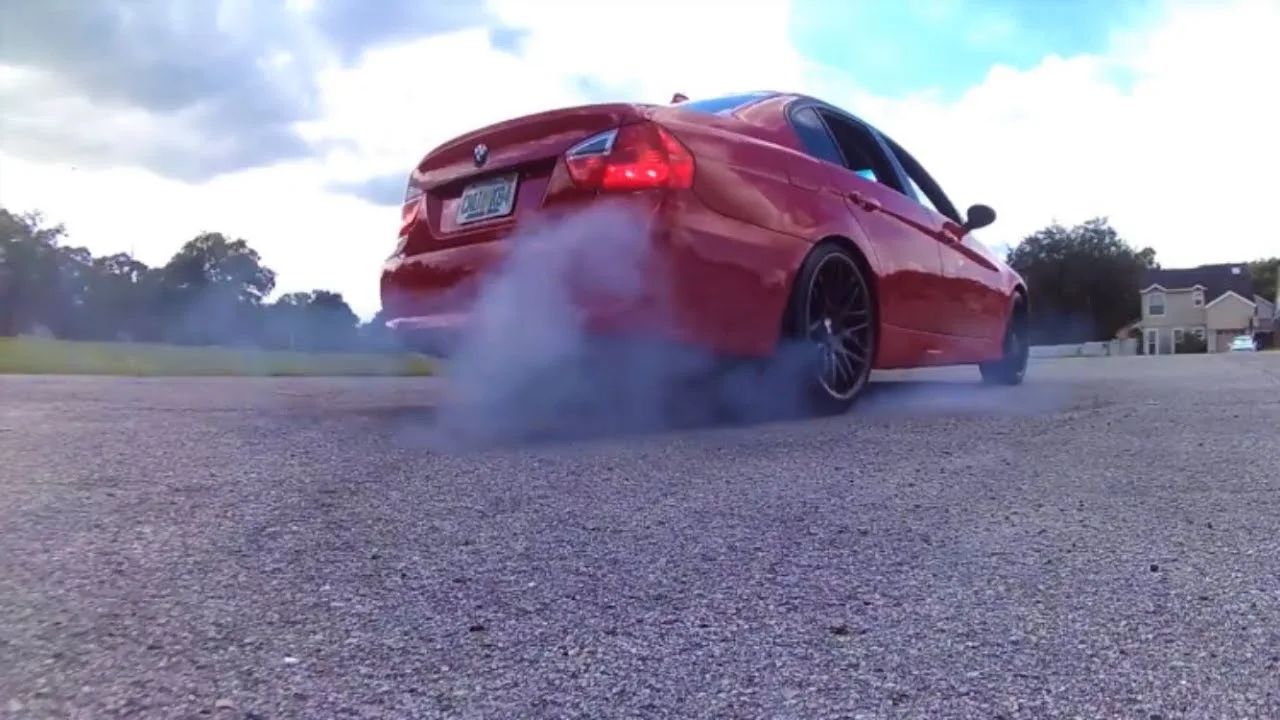
Burnouts are often associated with dramatic visuals—rear tires spinning, smoke filling the air, and engines revving high under load. They’re commonly linked to muscle cars and performance vehicles, and for many people, they represent raw power and excitement.
What’s often overlooked is how much is actually happening beneath the surface when a burnout occurs. Tire spin isn’t just about pressing the accelerator. It involves traction control systems, transmission behavior, torque delivery, drivetrain stress, and surface conditions all interacting at the same time.
This becomes especially important when automatic transmissions are involved. Automatic cars behave very differently from manuals during traction loss, and the risks—both mechanical and legal—are often misunderstood. A burnout that looks simple can place extreme strain on components that aren’t designed for that kind of stress.
Because of this curiosity around burnouts in automatic cars, it’s important to separate appearance from reality. Understanding what causes tire spin, how automatic transmissions respond, and what consequences can follow is far more useful than focusing on the stunt itself.
This guide breaks down what burnouts really are, how automatic cars handle them, the impact on the vehicle, the legal considerations, and why knowledge matters more than imitation.
What a Burnout Actually Is
A burnout is when a car’s driven wheels spin faster than the road surface can grip, causing friction and heat that produce smoke. That’s the simple definition, but there’s more behind the curtain.
A burnout happens when three things collide:
1. Engine Power
The engine has to generate enough torque to overpower the available traction.
2. Reduced Tire Grip
This can come from worn tires, certain road surfaces, water, dust, or intentionally reduced traction areas like burnout boxes at drag strips.
3. A Transmission or Drivetrain Response
This is where automatic transmissions differ the most. Burnouts require momentary torque surges combined with limited traction—but an automatic car is designed to prevent tire slip, not encourage it.
The key point is that burnouts are not simply “spinning tires.” They’re engineered moments of traction loss caused by mechanical force.
Why People Attempt Burnouts
Most people can admit that burnouts look impressive. But the reasons go deeper than just smoke.
A Symbol of Power
A burnout signals torque, strength, and car control—at least in professional settings.
A Pre-Race Ritual
In drag racing, burnouts heat the rear tires, creating better traction for the launch.
A Showmanship Element
Car meets, drift events, and motorsport demonstrations often feature controlled burnouts because they thrill crowds.
Curiosity
Many owners of automatic cars simply want to know how their vehicle would react—not necessarily attempt it.
Understanding the attraction is important, but so is understanding the risk behind the spectacle.
How Automatic Transmissions Behave Under High Stress
Modern automatic transmissions are built to protect themselves. They constantly manage:
- Line pressure
- Torque converter lock-up
- Gear engagement
- Heat distribution
- Traction control feedback
Because of that, an automatic car naturally tries to prevent the wheel spin needed for a burnout. Here’s what happens inside:
1. Torque Converter Function
The torque converter multiplies torque only at specific stall speeds. If you try to force tire spin, the converter may overheat quickly.
2. Transmission Fluid Stress
Burnouts can create extreme heat in transmission fluid, which affects lubrication and internal pressure.
3. Traction Control Systems Step In
Modern vehicles monitor wheel speed through sensors. If they detect sudden slip, they cut power or apply brakes.
4. Clutches and Bands Take the Hit
Inside an automatic transmission, tiny clutch packs engage and release constantly. Burnouts wear them out prematurely.
5. Stability Control Interference
The vehicle’s computer may step in to regain stability, overriding the driver entirely.
This is why automatic cars with high horsepower, rear-wheel drive, limited-slip differentials, and simple traction systems (like older muscle cars) are more commonly seen performing burnouts in controlled environments.
The Physics Behind Tire Spin
If you’ve ever wondered why tires smoke, the science is fascinating.
Friction + Heat = Smoke
When tires rotate faster than they should, friction builds rapidly. Rubber begins to vaporize, creating smoke.
Contact Patch Changes
The shape of the tire’s contact patch shifts during spin, reducing grip even further.
Weight Transfer
When the front rises, the rear tires lose some traction, which further encourages slip.
Surface Influence
Burnout boxes use water because a wet surface reduces traction dramatically, helping tires spin without excessive drivetrain strain.
Understanding the physics gives you an appreciation of why burnouts are more than just stomping on the accelerator—they’re a controlled violation of how traction normally works.
Common Myths About Burnouts in Automatic Cars
Let’s break down a few misunderstandings that floating around.
Myth #1: “Any car can do a burnout.”
Not true. Many cars won’t spin the tires even with full throttle due to traction control or insufficient torque.
Myth #2: “Burnouts don’t damage the car if done quickly.”
Heat builds almost instantly in transmissions and tires; the damage doesn’t require time.
Myth #3: “Turning off traction control makes it safe.”
It only removes electronic safeguards—it doesn’t protect mechanical components.
Myth #4: “Automatic cars are better for burnouts.”
In reality, automatics usually resist them because their internals are designed for smooth engagement, not aggressive wheel slip.
How Burnouts Can Damage an Automatic Car
Here’s where things get real. Burnouts look harmless in videos, but they can create serious issues:
1. Transmission Overheating
The torque converter generates huge heat spikes.
2. Tire Damage
Tires can soften, blister, or even fail.
3. Axle and Differential Stress
Launching a heavy car into wheel spin loads the differential unevenly.
4. Engine Strain
Full-throttle operation with no forward motion is not a natural condition for the engine.
5. Brake Wear
If someone tries to hold the car in place using the brakes, they can overheat in seconds.
6. Traction Control Faults
Disabling or fighting the system may trigger warning lights or stored fault codes.
7. Warranty Problems
Most manufacturers do not cover damage caused by intentional misuse.
These risks are why professional burnout demonstrations take place in controlled spaces with reinforced drivetrains.
The Legal Consequences of Performing Burnouts
Every state has different laws, but one thing is consistent:
Burnouts on public streets are illegal.
They fall under:
- Reckless driving
- Exhibition of speed
- Disorderly conduct
- Disturbing the peace
- Negligent operation
Possible penalties include:
- Fines
- Impoundment
- License points
- Arrest in severe cases
- Liability for damages
Insurance companies may also refuse coverage for vehicles damaged during illegal stunts.
Simply put—street burnouts aren’t worth the risk.
Where Burnouts Can Be Performed Legally
This is the part many people don’t know: you can enjoy the spectacle legally in the right settings.
1. Drag Strips
Burnout boxes are designed specifically for controlled tire spin.
2. Motorsports Events
Drifting exhibitions and burnout competitions are common at car festivals.
3. Professional Demonstrations
Experienced drivers with purpose-built cars sometimes perform burnouts at shows.
4. Closed Courses
Some driving schools and private tracks allow controlled traction-loss exercises.
If someone wants to experience the smoke and sound, these are the only environments that make sense.
Safer Alternatives for Those Curious About Controlled Wheel Spin
A lot of people want the feeling of a burnout without the risk. Fortunately, there are safer options:
1. Low-Traction Driving Courses
Winter driving schools use ice or low-friction surfaces to teach car control.
2. Skid Pads
These allow controlled sliding with minimal stress on tires.
3. Motorsport Simulators
Modern simulators replicate wheel spin realistically.
4. Track Days
You can explore acceleration without encouraging wheel spin.
All of these offer education and excitement—without the mechanical gamble.
Why Understanding Burnouts Matters More Than Attempting One
We’ve talked to so many car owners who are simply curious about what their vehicle is capable of. They want to understand the mechanics—not necessarily perform the stunt.
By learning:
- How torque is transferred
- How transmissions handle load
- How tires behave
- What traction control systems do
- Why heat is the biggest enemy
- What surfaces increase or reduce grip
…you gain valuable insight into how your car operates as a whole.
Understanding your vehicle is empowering, and burnouts just happen to be a dramatic doorway into the world of traction physics.
Final Thoughts
So after breaking everything down—from the mechanics to the legalities—here’s what to take away:
Burnouts in automatic cars are not impossible, but they place enormous strain on parts that were never designed for prolonged wheel spin. They’re impressive to watch, meaningful in certain motorsports settings, and undeniably tied to car culture. But they also come with real risks, both mechanical and legal.
If you’re fascinated by the science behind them, you’re not alone. Many car enthusiasts love understanding the finer details of traction, torque, and vehicle dynamics. Just remember that the safest place for any stunt is always a controlled, legal environment designed to handle the stress.
Curiosity is good. Knowledge is even better. And when it comes to burnouts, knowing the mechanics behind the smoke is far more important than creating the smoke yourself.